
Up here, a lot of us live a little way off the main road. The driveway winds through the birch, the house sits back in the trees, and in January the snowbanks at the end of the lane can be taller than the mailbox. That's exactly why a good address sign matters: it helps friends find you the first time, it saves the delivery driver a U-turn, and on a bad night it helps an ambulance or fire crew find the right lane without guessing.
We make metal address and name signs here in Sturgeon Falls, and the questions we hear most aren't about design. They're about practical things: how big, how high, which screws, and will it hold up through a Northern Ontario winter. So we've put the answers in one place. Pour a coffee and let's go through it.
As an Amazon Associate, The Chalk Shop earns from qualifying purchases.
1. Start From the Road, Not the Front Step
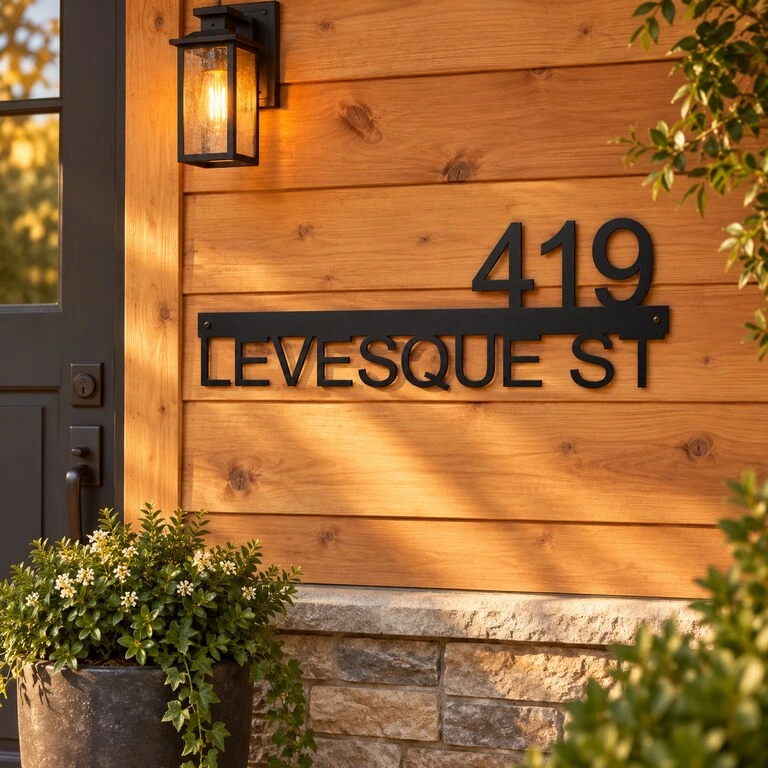
The most common mistake is choosing a sign while standing beside it. Before you pick anything, go out to the road, or better yet drive past slowly at normal speed, and ask yourself: where would my eyes naturally land, and how far away am I when I need to know this is the place?
- Numbers come first. The civic number is the part that actually gets people to your door. A street name, family name or a loon silhouette is lovely, but it shouldn't crowd the number.
- Simple, bold lettering reads best. Thin scripts look beautiful up close and disappear at a distance. Save the fancy fonts for a porch or indoor sign.
- Bigger than you think. A number that looks huge on your kitchen table looks modest on the side of a house 20 metres from the road. When in doubt, go up a size.
2. Contrast Is Everything
A dark sign on a dark wall is basically invisible at dusk. Think about what will be behind your sign:
- Light siding, stone or painted brick: a black or dark sign pops nicely.
- Dark cedar, stained logs or dark brick: a dark sign can blend in. Consider mounting it on a lighter backing board, choosing a lighter spot on the house, or putting it on a post where the background is sky or snow.
- Cut-out designs: on a cut metal sign, the wall shows through the letters and the open shapes, so the wall colour becomes part of the design. Hold a piece of paper the size of your sign against the spot to get a feel for it.
Lighting helps too. A porch light that shines across the sign, or a small solar light aimed at a post sign, makes a big difference on our long winter evenings, when it can be dark well before supper.
3. Picking a Size and Shape for the Spot
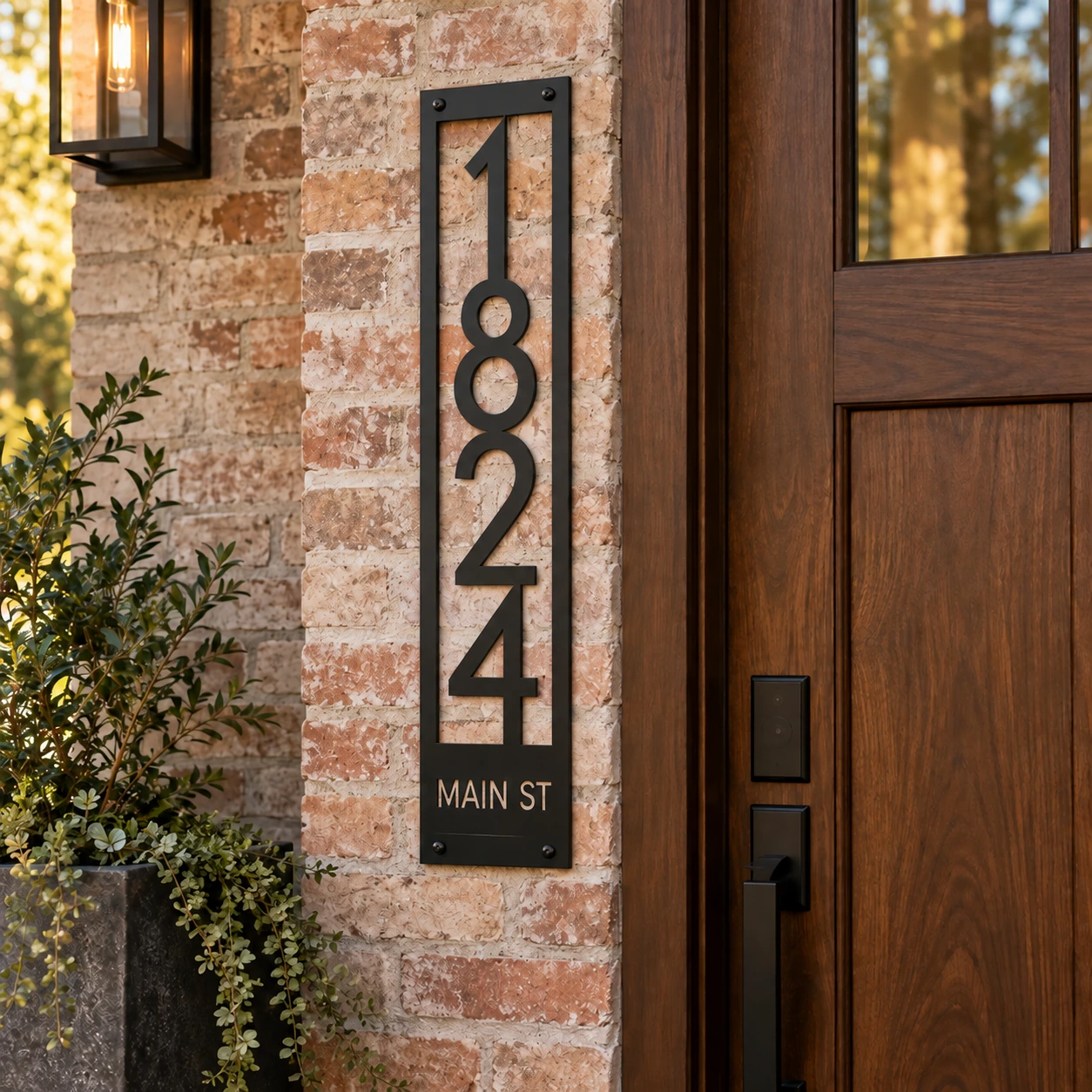
Match the shape of the sign to the space you've got rather than the other way around:
- Wide wall beside the door or garage: a horizontal sign with the number and street on one line, like our Modern Street Bar, reads quickly from a car.
- Narrow pillar, post or the strip beside a door frame: a vertical layout, like the Modern Vertical Address, keeps the numbers large without needing much width.
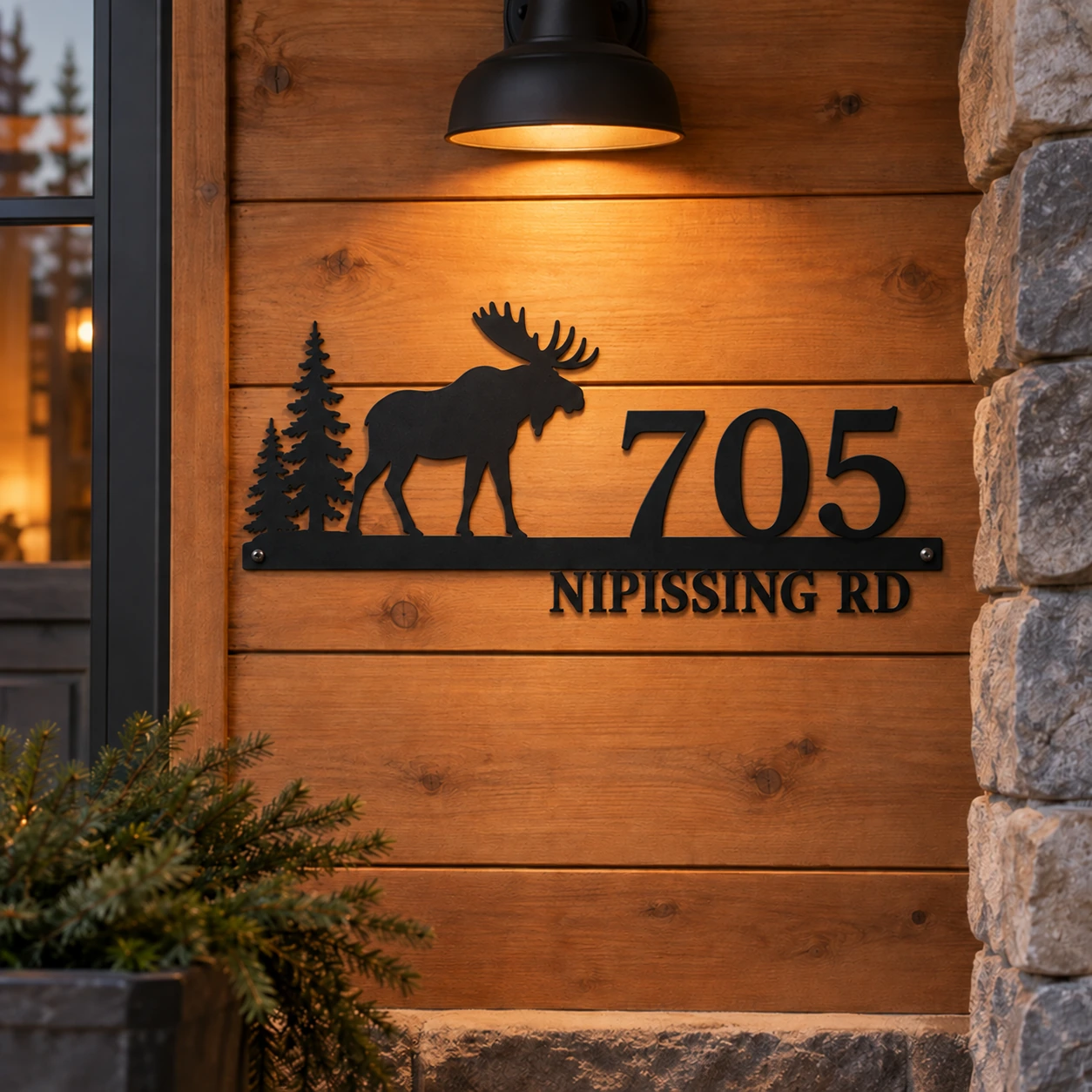
- A camp or cottage with a bit of character: a design with a moose, loon, birch or pines makes a nice first impression, as long as the numbers stay clear and big.
If you're torn between two sizes, cut both out of cardboard, tape them up and look from the road. Five minutes with a roll of tape saves a lot of second-guessing. You can browse the shapes we make in our address signs collection.
4. Where to Put It
A few rules of thumb that work for most homes:
- Visible from the road in both directions. Check from each side; a spruce tree or a parked truck can hide it from one direction.
- Above the snow line. Here, that matters more than anywhere. A sign at knee height on a post is gone by February. Aim for eye level or a little higher, and keep it clear of where the plow throws snow.
- Close to the door or driveway it belongs to. On a corner lot or a shared lane, make sure it's obvious which house it's pointing to.
- Not behind seasonal stuff. Hanging baskets, wreaths and porch screens have a way of slowly covering an address sign.
5. Rural Properties: Think About 911
If you're out on a rural road or a camp lane, your civic number isn't just decoration. Many rural municipalities, including plenty here in Northern Ontario, install an official civic number sign at the end of each driveway so emergency crews can find you quickly. A decorative address sign is a wonderful addition, but it should complement that official sign, not replace it.
A few practical tips for rural lots:
- If your house can't be seen from the road, put a number at the end of the driveway and one on the house.
- Keep brush trimmed and snow cleared around the official number sign as well as your own.
- If your official sign is missing, damaged or faded, contact your municipality. They can tell you the rules for placement and replacement.
- If you're on a lake and people sometimes arrive by boat, a sign facing the water is handy for guests (and very cottage-y).
6. Mounting It on Brick, Siding, Wood or a Post
Whatever the surface, use exterior-rated, rust-resistant hardware. Regular zinc screws can rust, and rust streaks run down siding and stone. Stainless steel is the safe bet outside — browse stainless exterior screws on Amazon.ca. Always use a level and a pencil mark before you drill; a crooked address sign is something you'll notice every single day.
Wood, log or cedar siding
The easiest surface. Screw straight into solid wood, and pre-drill so you don't split the boards. If you have log or board-and-batten walls, try to hit the solid part rather than a gap.
Vinyl or aluminum siding
Siding needs room to expand and contract with our big temperature swings. Don't clamp a sign tight against it, or the siding can buckle. Screw through to the sheathing behind, snug but not crushing, or use a mounting block made for siding so the sign has a solid, flat base.
Brick, stone or concrete
Drill into the mortar joints where you can; it's easier to drill and easier to patch if you ever move the sign. Use masonry anchors or concrete screws sized for your hardware — browse masonry anchors on Amazon.ca — and a masonry bit.
On a post at the end of the driveway
Frost heave is the enemy of anything standing in the ground up here. Set a post deep enough to resist heaving, or use a post on a solid base, and brace it well. A post sign takes a lot of wind and the odd snowblower bump, so mount it securely and keep it back from the plow line.
Safety note: before drilling into any wall, think about what's behind it, such as wiring for the porch light or the doorbell, and gas or water lines. If you're unsure, ask a local contractor.
7. Winter, Weather and Care
Our signs are powder-coated, a finish that's well suited to outdoor use. Northern Ontario still throws a lot at anything outside: freeze-thaw cycles, road salt, ice storms and spring meltwater. A little care keeps your sign looking sharp:
- Keep it out of standing water and plow spray where you can. Salty slush is hard on most outdoor finishes.
- Brush snow off gently with a soft brush or your mitt. Skip ice scrapers and metal shovels.
- Rinse and wipe in spring with mild soapy water to get rid of winter grit and salt, then dry it off.
- Check the screws once a year. Freeze-thaw can loosen hardware over time; a quick snug-up in the fall saves trouble later.
8. Make It Feel Like Yours
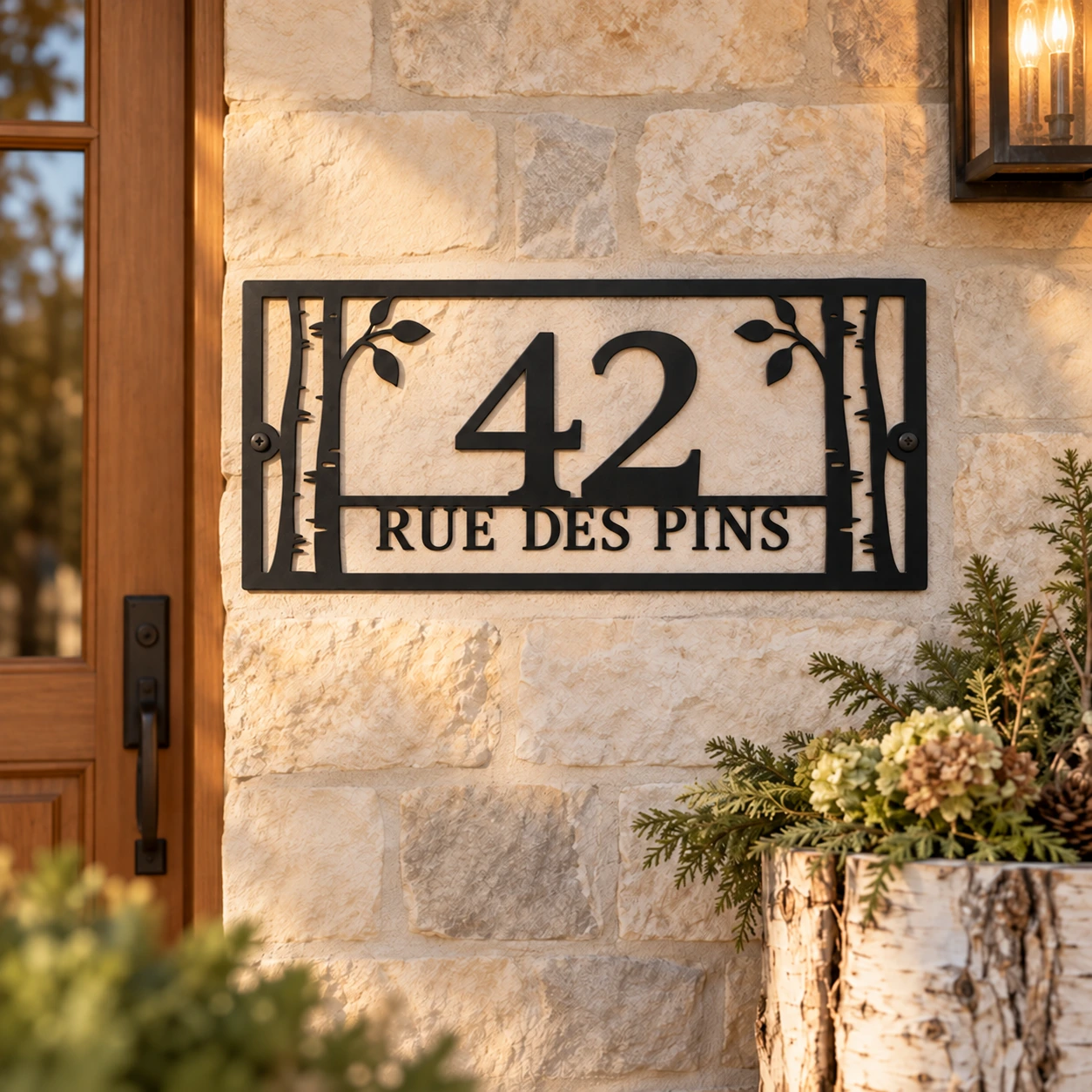
Once the practical side is sorted, have fun with it. Lots of families around here add a street name in French, like our French Birch Address, or a bit of the outdoors: a moose and pines, a loon on the water, a deer at the tree line. Just keep the number the star of the show. If you're also naming the camp or cottage, our cottage decor guide has more ideas for the end of the driveway and the dock. And if you have something specific in mind, like your family name, a particular animal or a different layout, our custom orders page is the place to start.
Frequently Asked Questions
How big should the numbers on my address sign be?
It depends on how far the sign is from the road. The farther back your house sits, the bigger the numbers should be. The simplest test is to tape a cardboard mock-up in place and check it from the road at driving speed. If you have to squint, go bigger.
What's the best height to mount an address sign?
Around eye level, or a little higher, works for most homes. In Northern Ontario, also make sure it stays above the snowbanks and away from where the plow throws snow, especially on posts at the end of the driveway.
Can I mount a metal sign directly on vinyl siding?
Yes, but don't clamp it tight. Vinyl moves with the temperature, so screw through to solid sheathing without crushing the siding, or use a siding mounting block for a flat, solid base.
Does a decorative sign replace my rural 911 civic number sign?
No. If your municipality installed an official civic number sign at your driveway, keep it in place and visible. A decorative sign is a great addition at the house or lane, but check with your municipality about their rules.
Can a metal address sign stay outside all winter?
Our metal signs are powder-coated, a finish that's well suited to outdoor use. Mount it securely, keep it out of plow spray and standing water where you can, and give it a gentle rinse in spring.
Ready to Help People Find You?
A clear, well-placed address sign is one of those small things that makes life easier every day, and it can add a lot of charm to your place too. If you'd like help choosing a size or layout for your spot, send us a message with a photo of where it's going and we'll be happy to help.
Locally made · Meaningfully yours.